October, 07,2025

Today, I invited E and B to explore two different pumpkins—one yellow and one white. Together, we observed the outside of each pumpkin, discussing their colour, size, and texture. B commented that the pumpkin was “heavy,” and then we became excited to see whether the insides would look the same or different.

Once we opened the pumpkins, we immediately began comparing the colours, textures, and seed sizes. E was very curious and engaged in sensory exploration, eagerly using their hands to feel the inside. B, on the other hand, was more fascinated by watching me cut the pumpkin open than touching the slimy “guts.”

B also got to feel the difference between weight of a pumpkin full and unopened to opened and hollowed.


This activity reflects the Pathway of Inquiry, Engagement, and Expression, as B and E explored with their senses, asked questions, and made predictions about the pumpkins. Invitation to play; E and B investigate materials, compare differences, and build early scientific understandings.

November 24,2025

I revisited the pumpkin exploration with B by sharing a video of our activity together. B watched it several times, showing excitement(gestures, sounds) and pride as he relived the moment. B was eager to share the video with Rupinder, laughing and repeating the sounds “EEeEeeE” he made while I was cutting the pumpkin open. Watching himself in the video seemed to deepen his engagement and helped him make new connections to the earlier experience. This reflective process strengthens memory, identity, and connection, supporting Well-being and Belonging as B proudly shared his learning with others.
Oct. 03,2025

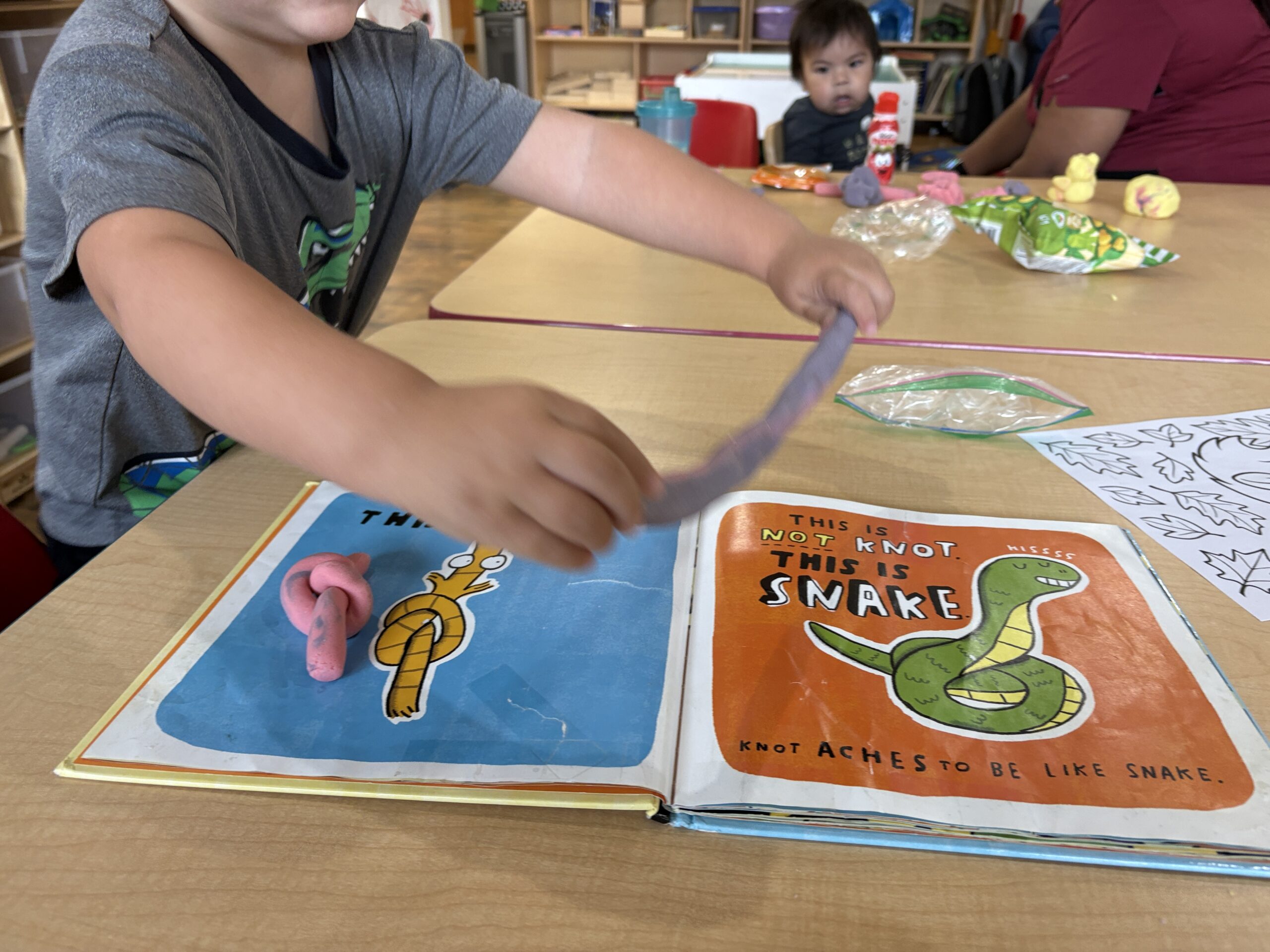
While reading “Knot cannot” by Tiffany Stone, B engaged with the story by using playdough to recreate shapes from the book. For instance B formed their own “Knot’ and “snake”-twisting, rolling, and bending, carefully matching what he saw in the book. This shows B’s understanding of the story, strengthened his fine motor skills, and encourages symbolic thinking. By connecting the playdough to the illustrations, B demonstrated early literacy engagement- showing comprehension, creativity, and the ability to extend the book into play.

Next-time I when I retell the story, I could offer pieces of yarn, pipe cleaners, or other loose parts so the children can retell the story using their own creations


Oct. 06,2025

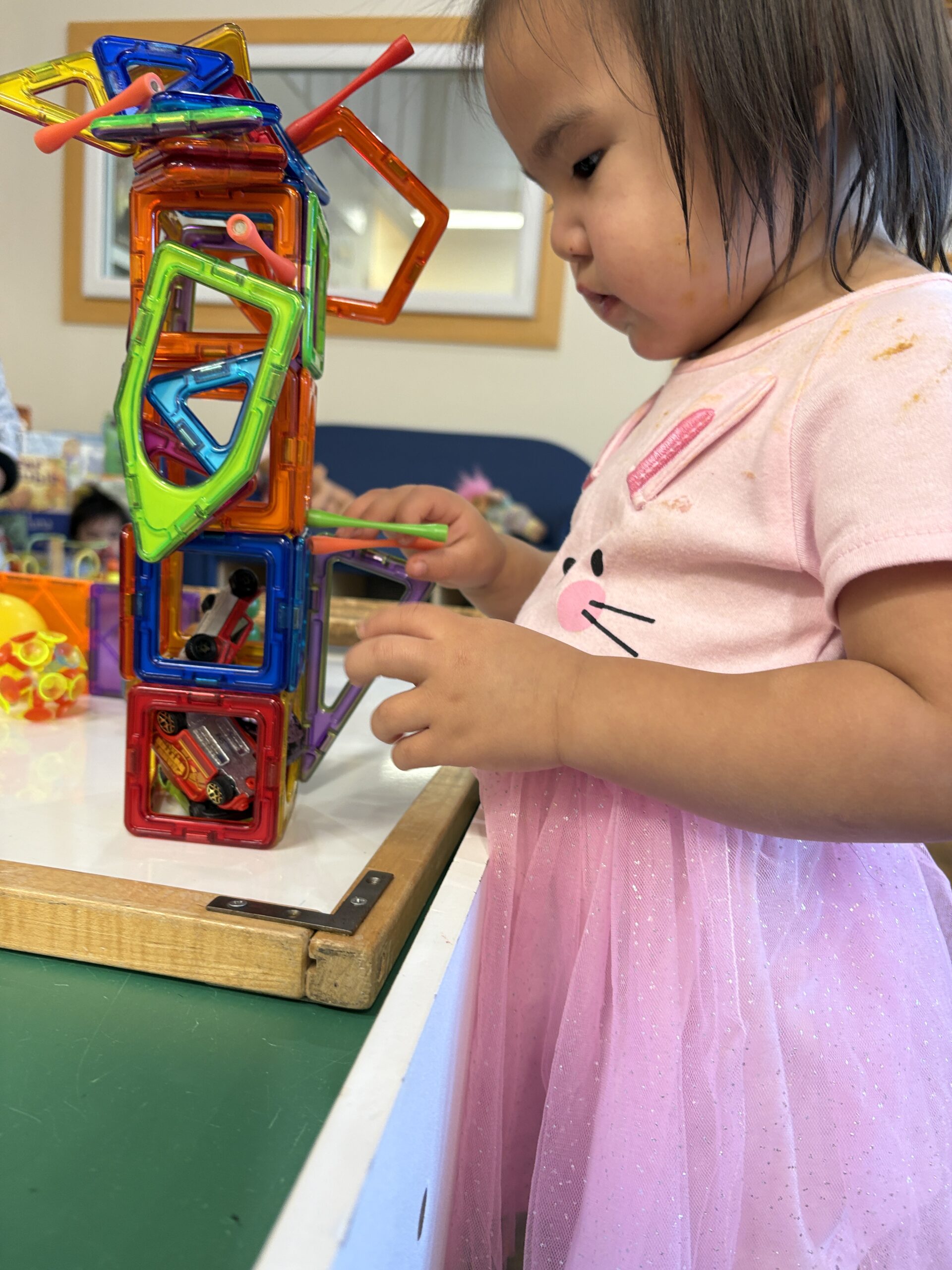
This moment highlights several areas of “E’s” early learning

E’s body language shows concentration and persistence as E carefully adds and adjusts pieces to their structure using the magnetic tiles. As E’s cognitive development in experimenting with balance, height, and stability, showing E’s understanding in early problem-solving. Using different shapes, exploring cause and affect- testing which pieces hold and which fall. I asked E ” what do you think will happen if I put this green tile here?” E immediately “No!” put the tile back on the table. I smiled “You are doing your best and that shows”

Play dough fun

Oct. 03,2025

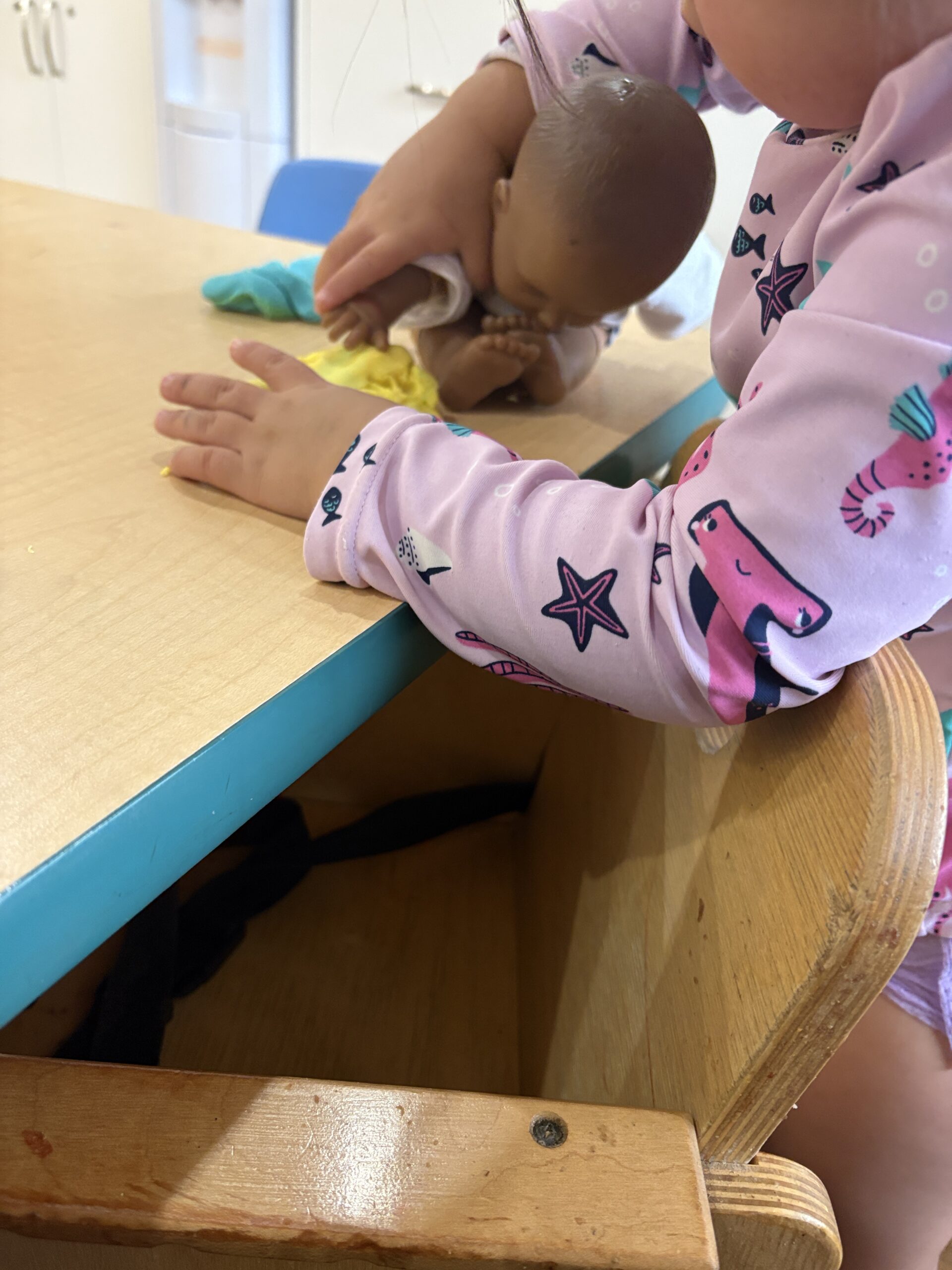
The playdough Willa and B made for B & E to take home. While waiting to get picked up E demonstrates her imagination and sensory play while engaging with playdough with her baby doll. As E carefully pressed the doll’s hands into the playdough to create hand prints, E shows an emerging awareness of cause-and-effect and symbolic play. This interaction supports E’s fine motor development, hand-eye coordination, and creativity. It also highlighted her nurturing disposition, as she included her doll in the activity, reflecting early social-emotional skills and the ability to imitate real-life caregiving behaviors.

I would like to revisit this with E by using different textures for her like Clay, sand, or even slime to recreate hand prints and show her this photo of E creating the hand print. “What else can make a print?” “What was your baby doing?”